


The Jabori Foundation - APT Kenya Project
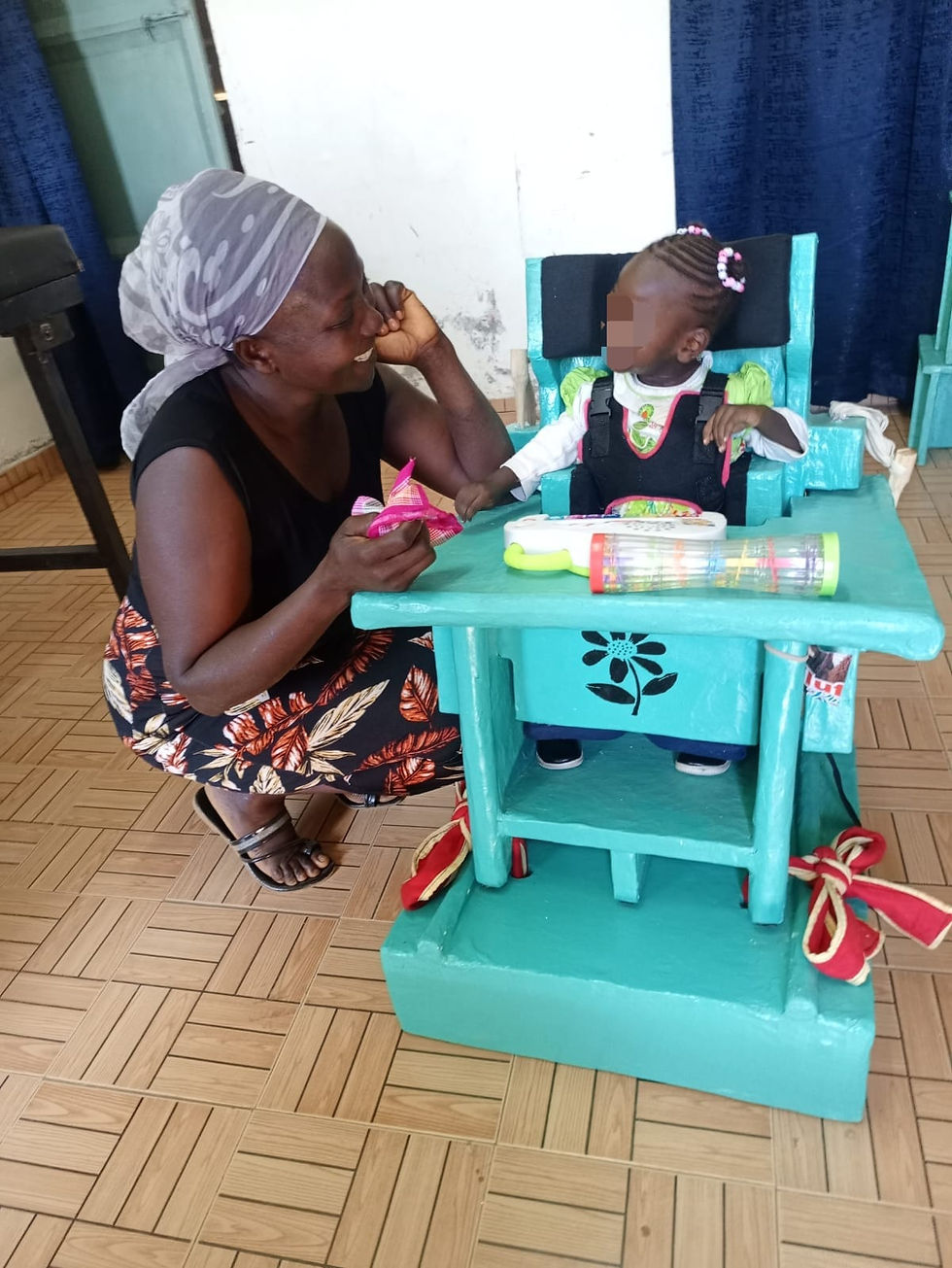
In 2022 we introduced our biggest project to date – APT Kenya, a project that makes postural support equipment for children with disability using cardboard and paper and is providing employment that helps families out of poverty.
Although The jabori Foundation (formerly known as The Potter’s House CBO) was founded in 2018 and Appropriate Paper-Based Technology (APT) had been known about and learnt by the founder since 2017, it wasn’t until 2022 that God answered our prayers for the finance to start this project that we knew was so desperately needed and would transform so many lives. Since then, the project has gone from strength to strength and has served children from all over Kenya who did not have access to the equipment they need.
It is estimated that approx. 114,500 children are born with cerebral palsy in Kenya each year and 70% of those children live in poverty. Nearly half of these will be unable to sit or stand unsupported. Children with disabilities in Kenya rarely have access to the equipment they need to sit up or stand and very few parents have ever had the diagnosis explained so do not know how to best care for their child. Because the children can’t sit up they spend their days lying on the bed, settee or floor with little or no stimulation. Being in an upright functional position is essential for developing interaction and communication skills as well as eating, for safe swallowing. Without good postural management, children often develop painful contractures and deformities, such as hip dislocations, limb contractures and spinal deformities. They are trapped in their homes and cannot participate in family or community activities. Just ignored by those around them, stepped over or forgotten, they have an isolated and often painful existence.
The APT Kenya project makes chairs, standing frames and wheelchair inserts using cardboard, paper and a flour water paste as the glue. All the materials are sourced locally. The process starts by making the boards. This is 3 layers of cardboard glued together using a flour and water into a paste. Once the boards are dry (which takes a couple of days), staff can draw the parts of the devices onto the boards using the measurements taken by a therapist. The parts are then cut out and tied together using stockings bought at the local market. Then straps of thin card are put across the joins. Three layers of paper are stuck together and then torn into strips to cover the device. This is the first paper layer and once dry, a layer of thicker brown paper is used to cover the device. To finish, the device is painted and decorated and cushions and straps fitted.

It is vital that children receive the correct device to meet their needs. Therefore, a qualified therapist assesses, measures and prescribes the right device and adaptations, and the device is fabricated by trained APTers.
APT devices improve postural control, enhance function, and prevent deformity. They benefit mental health and social interaction improving quality of life and reduce prejudice and stigma. For the caregiver, they help to reduce the burden of care and benefit their physical and mental health.
This equipment really is changing lives.
With these devices, for the first time, children are able to sit or stand up and engage in family life. Parents feedback shows how other children, neighbours and family are more willing to talk and play with the child and as a result of the social interaction and stimulation, children are trying to communicate, which they never did before. Some neighbours have even confessed to changing the way they think about the child and are now seeing they have potential, whereas before they ‘didn’t think they could do anything’. For some children, having a chair has made going to school possible. Before, they could not sit and balance on the wooden benches used in classrooms. At last, these children are being included in family life and for the parents, it is making caring for them much easier. They can put their child in the device and do other work knowing the child is happy, safe and comfortable.
Since the project began in 2022 we have provided over 700 devices to children, with some travelling nearly 200 miles for a device. We are now training others so that even more children can benefit from APT and we have provided training to three other organisations in Kenya.

Not only is this project benefiting children, it is also benefitting the wider community by providing employment. As well as the APTers and therapist, parents from the families The Jabori Foundation works with are given the less skilled work of papering and painting which helps them to pay school fees and feed their family.
Caregivers with children with disabilities who do not attend school, are welcomed to come to work with their child. This ensures the child is not left at home alone and we get more opportunity to see the wellbeing of the child and encourage the parent in caring for them. This goes an extra mile in helping the parents become more confident in taking their child out with them which is then an encouragement to other parents.
Having such a project in the heart of the community and involving community members is helping to break down the barriers and stigma that families with children with disabilities face and it is raising awareness of disability.


That was an interesting read, and I liked how the blog broke down the topic in a way that feels approachable without being too simplified. Some of the points really highlight how important it is to stay consistent with learning and understanding core concepts, especially for students dealing with complex subjects. I’ve noticed that having a bit of external support, like rapid assignment help, can sometimes make things less overwhelming. I also came across this useful resource for corporate law assignment help, which seems relevant for students in that field. Overall, the blog gives a practical perspective that many can relate to.